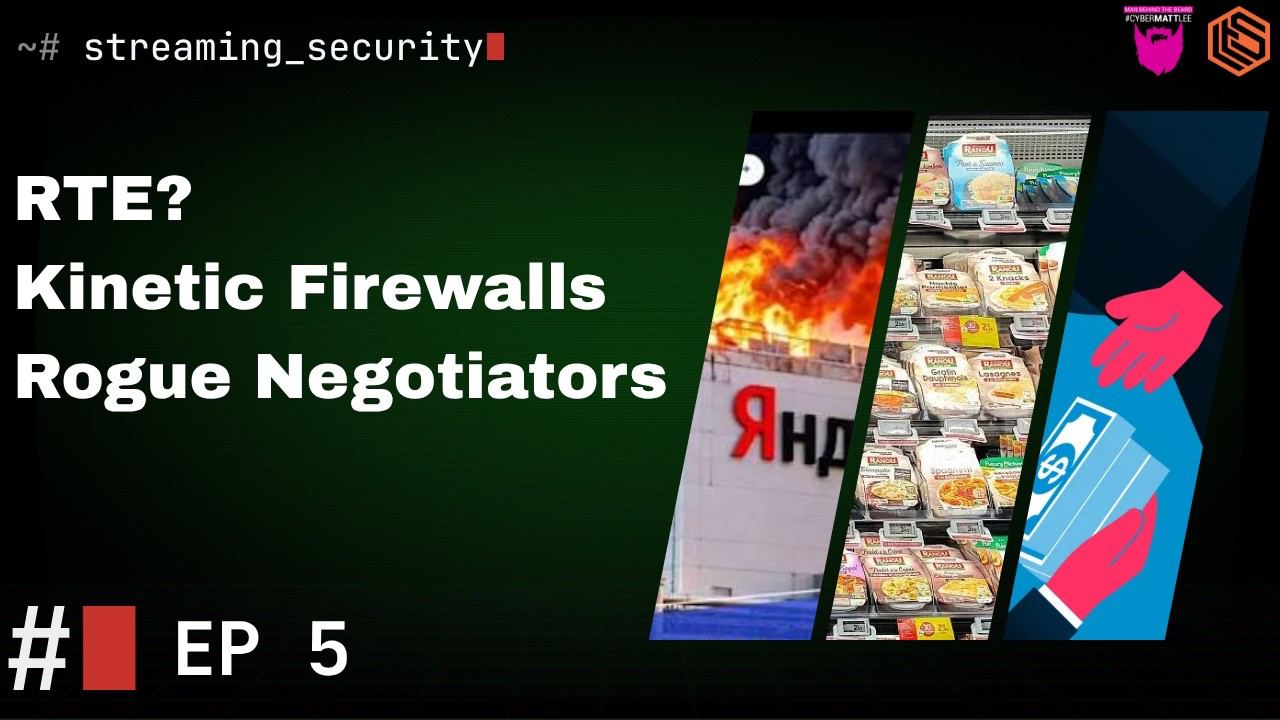
Remote Thaw Execution: Danfoss refrigeration controllers
Sourcing: Claroty Team82 technical research; incident reporting by Kevin Beaumont.
- Danfoss AK-SM 800A system managers coordinate commercial refrigeration and cold storage across supermarkets and warehouses. Team82 found three vulnerabilities in the embedded web interface:
- CVE-2025-41450 (CVSS 8.2): an undocumented “code of the day” authentication bypass. The admin password is generated from the device’s current date and time. Beaumont noted thousands of internet-exposed units kept the default admin username with this date-based password.
- CVE-2025-41451 (CVSS 7.6): unsanitized input on the alarm-to-mail (SMTP) page is formatted straight into OS shell commands, giving post-authentication RCE.
- CVE-2025-41452 (CVSS 5.4): authenticated Nginx configuration injection through the
load_nginx_headersendpoint, overwritingheaders.conffor a persistent denial of service.
- More than 2,700 controllers were directly reachable on Shodan and Censys. Attackers triggered defrost cycles across European supermarket chains, spoiling food inventory.
- Hype check: media reports called it an unprecedented attack by a swarm of agentic AI bots. It took a one-line bash script looping through public IPs with today’s date as the password.
- Danfoss firmware R4.3.1 removes the date-based backdoor.
CIS Controls: 1.1 and 2.1 (asset and software inventory, because facilities and OT gear often bypass IT procurement), 12.2 and 12.7 (secure network architecture and remote access: industrial control planes are never NATed straight to the WAN, use a VPN or ZTNA), 4.8 (disable WAN-facing management interfaces by default).
NIS2 / ENISA: 12.4 (asset inventory, including OT and embedded controllers), 6.7 and 6.8 (no unnecessary exposed management ports, 6.7.2(f); isolate OT in dedicated zones, 6.8.2(c)), 6.6 and 6.10 (patch known critical vulnerabilities without undue delay).
Kinetic mitigation: drone strikes take out Russian botnets
Sourcing: Tom’s Hardware reporting; Cloudflare and NetBlocks network telemetry.
- Long-range Ukrainian drone strikes hit major Yandex data centers in Sasovo (home to two supercomputers) and Kaluga.
- Yandex Cloud reported more than 84 services offline, and Yandex’s overall network traffic dropped to 30%.
- Cloudflare recorded Russian bot traffic across the web collapsing to 0.4% of its previous two-week maximum.
- The strikes followed Russian missile strikes on Ukrainian data centers in Kyiv.
- The lesson: physical destruction is the ultimate Layer 1 deny rule, and concentrating C2 or enterprise workloads in one physical region is a single point of failure.
CIS Controls: 11.1 and 11.2 (data recovery and continuity: physical and geographic redundancy so losing one facility does not end operations).
NIS2 / ENISA: 4.1 and 4.2 (BCP/DRP, backup and redundancy across sites and regions), 13.2 (protection against physical and environmental threats).
Rogue negotiators: ransomware “remediation” owner indicted
Sourcing: US Department of Justice indictment and press release.
- Zohar Pinhasi, 50, owner of Florida ransomware remediation firm MonsterCloud (operating as “Zack Silver” and “Zack Green”), was indicted on federal wire fraud charges. These are charges, not a conviction.
- MonsterCloud allegedly claimed “proprietary tools” and “advanced decryption techniques” to recover files without paying. Per the indictment, it had no such tools: Pinhasi secretly paid the attackers, got the keys, and charged clients large markups.
- Prosecutors allege he billed victims more than $19 million while paying about $8 million in ransoms, for example paying an $8,200 ransom while invoicing the client $150,000.
- For MSPs, it is a failure of third-party trust during active incident response. CISA and the FBI advise against paying ransoms, since payments fund the ecosystem and do not guarantee recovery.
CIS Controls: 15.1 and 15.4 (service provider management: contractual transparency, audit rights over IR vendors, proof of root-cause analysis), 17.2 and 17.4 (vet incident response partners long before you need them).
NIS2 / ENISA: 5.1 and 5.1.4 (supply chain security and contractual requirements, including audit rights and notification), 3.1 and 3.5 (defined incident handling with clear channels to authorities), 10.2 and 10.4 (background verification and accountability for security providers).
Hype check: “self-replicating AI” vs. script loops
Sourcing: Anthropic red-team research.
- Anthropic researchers evaluated whether small open-weight models (Gemma4-26B-A4B, Qwen3.5-9B, GLM-5.2) could autonomously replicate across IoT devices like smart TV boxes.
- Using pipeline parallelism across 15 off-brand Android TV boxes ($55 each), model shards ran at 0.39 tokens per second.
- Each replication cycle took 28 to 150 hours per hop: a slow digital slime mold, not a high-speed worm.
- Headlines said rogue AI worms were spreading on home fridges. The evaluation used simplified harnesses (Memento) where agents ran standard CLI commands, reverse shells, and unauthenticated ADB commands.
- Our take: the real enterprise risk is not rogue AI consciousness. It is unscoped API tokens, missing container boundaries, and over-permissioned service accounts.
CIS Controls: 6.1 and 6.8 (least privilege: scope the API credentials and service accounts used by developer tools and AI agents), 8.11 and 13.1 (watch for large anomalous transfers and unauthorized device-to-device traffic).
NIS2 / ENISA: 11.2, 11.3, and 11.7 (need-to-know, least privilege, time-bound access, and MFA for service accounts), 6.7 and 6.9 (restrict execution environments, container sockets, and egress from developer sandboxes), 3.2 (log command execution, API calls, and resource spikes).
Physical interdiction: Ledger hardware wallet implants
Sourcing: BleepingComputer; reverse engineering by Mark Karpelès / Tibane Labs.
- Ledger confirmed that hardware wallets sold through reseller CryptoBilis, and through third-party sellers on Amazon Japan and Yahoo! Auctions, contained unauthorized implants designed to steal seed phrases.
- Attackers modified Ledger Nano X devices by replacing batteries or adding custom flex PCBs behind the OLED screen.
- The implant: an STM32G431KBU6 (Arm Cortex-M4) microcontroller, a 2x2 mm eSIM, a shielded LTE module, and a hidden antenna cable.
- It sniffed display output and button presses to capture seed phrases, then sent them out over LTE.
- Ledger’s Genuine Check did not detect the modification, because the original Secure Element was left intact.
CIS Controls: 1.1 and 15.1 (hardware inventory and supply chain: verify provenance and use tamper-evident shipping for critical devices), 12.2 (out-of-band exfiltration bypasses network controls once hardware integrity is gone).
NIS2 / ENISA: 5.1 and 5.1.2 (supplier selection, direct manufacturer channels, reseller risk), 6.1 and 6.1.2(f) (validate delivered hardware before deployment), 12.2 (safe acquisition, transport, storage, and handling).
Three things to do before Monday
- Find and isolate exposed OT and facilities gear (CIS 1.1, 12.2; NIS2 6.8, 12.4). Scan your perimeter for refrigeration, HVAC, and building management interfaces, and move them behind ZTNA or a VPN.
- Audit incident response contracts (CIS 15.1, 17.4; NIS2 5.1, 3.5). Require no undisclosed ransom payments and delivery of raw forensic logs.
- Scope API tokens and verify hardware provenance (CIS 6.1, 15.1; NIS2 6.1, 11.2). Restrict tokens used in automation pipelines, and buy high-value hardware through verified channels.
Sources
- TechRadar: Hidden daily passwords and command injection flaws leave thousands of Danfoss supermarket systems open to remote takeover
- Tom’s Hardware: Russian disinformation bot traffic nearly eliminated after Ukraine drone strikes on Yandex data centers
- US Department of Justice (EDNY): Owner of Florida ransomware remediation company charged with defrauding clients
- BleepingComputer: Ledger confirms hardware wallet spy implant behind crypto thefts